02
Two books, one continuing inquiry

Books

One book asks what stories furniture can carry. The other asks what hidden patterns observers bring to design.

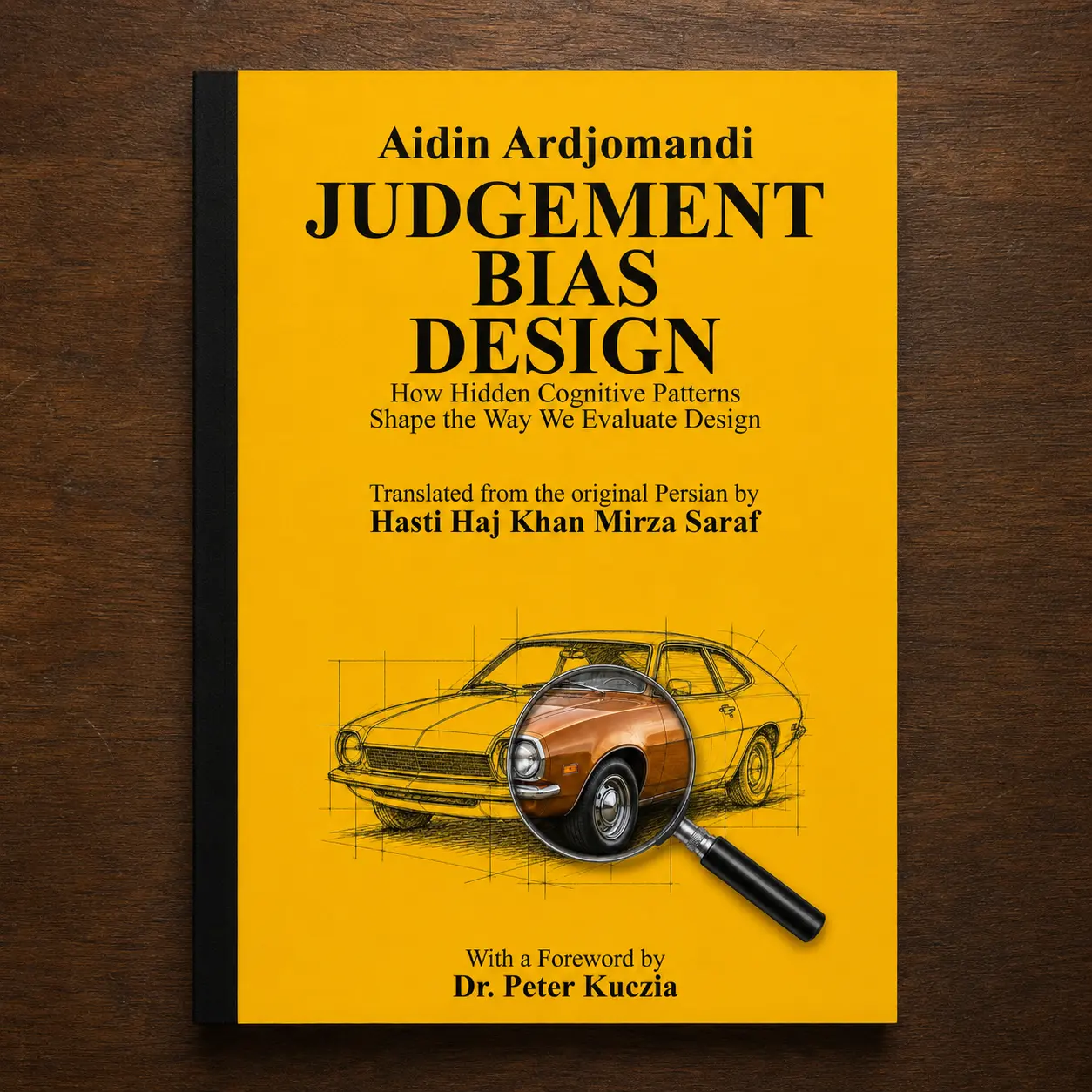
Judgement, Bias, Design book cover by Aidin Ardjomandi
Book 01 · Design criticism · Cognitive psychology

Judgement, Bias, Design

How Hidden Cognitive Patterns Shape the Way We Evaluate Design

When we call a design good, innovative or beautiful, what exactly are we judging? How much of that judgment belongs to the object, and how much comes from reputation, presentation, group consensus, cultural habit and the evaluator's own first impression?

Judgement, Bias, Design maps the cognitive forces that enter evaluation. The halo effect allows one attractive quality to colour an entire verdict. Confirmation bias makes us collect evidence for a conclusion already forming. Groupthink can make agreement feel like accuracy. Survivorship bias hides the rejected ideas and failed experiments that would complicate a success story.

The book does not promise an impossible objectivity. It argues for cognitive humility: the capacity to notice one's interpretive position, delay premature certainty, make criteria visible and design fairer systems of evaluation. It is written for designers, jurors, educators, editors, students and everyone whose decisions determine which ideas become visible.

Author
Aidin Ardjomandi
ISBN
9780000049162
Foreword
Dr Peter Kuczia
English translation
Hasti Haj Khan Mirza Saraf
Language
English
Subject
Design evaluation and cognitive bias
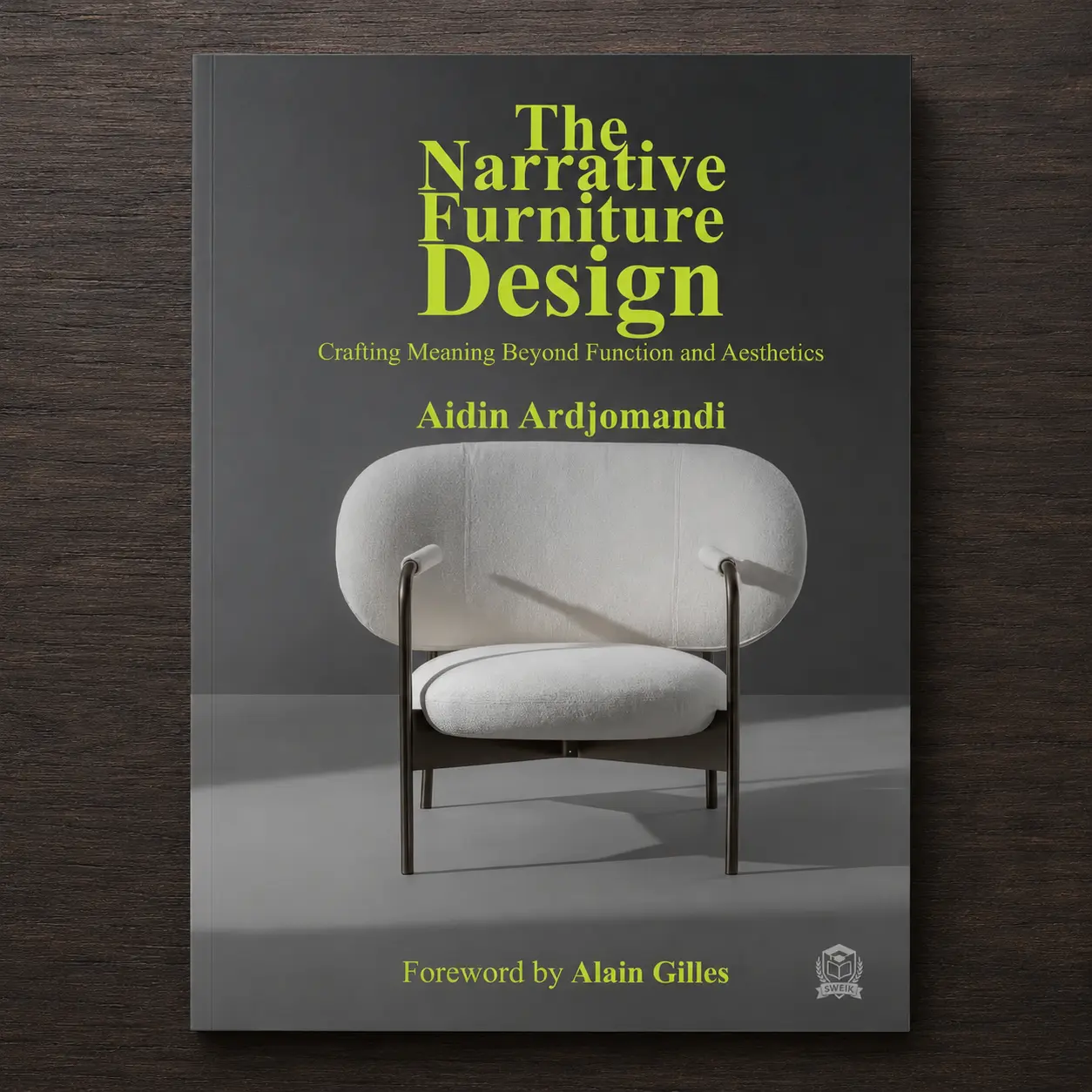
The Narrative Furniture Design book cover by Aidin Ardjomandi with foreword by Alain Gilles
Book 02 · Furniture · Storytelling · User experience

The Narrative Furniture Design

Crafting Meaning Beyond Function and Aesthetics

Furniture is often discussed through function, material and style. This book opens another dimension: furniture as a narrative medium. A chair, table or cabinet can carry memory, identity, ritual and cultural reference while continuing to perform its practical role.

The book examines how proportion, surface, material, movement and interaction can become narrative devices. It asks how an object can invite interpretation without collapsing into illustration, and how designers can construct meaning that users discover through time rather than consume in a single glance.

Its central proposition is that emotional durability matters alongside physical durability. When a person can read, remember and continually reinterpret an object, attachment may outlast novelty. Narrative therefore becomes neither decoration nor marketing copy, but part of the designed experience itself.

The foreword is written by acclaimed Belgian designer Alain Gilles. The cover features his Cross Lounge Chair for Bonaldo, connecting the book's theoretical argument to a contemporary example of furniture with a distinct narrative presence.

Author
Aidin Ardjomandi
ISBN
9798264370984
ASIN
B0FQBHLML3
Foreword
Alain Gilles
Language
English
Subject
Narrative furniture design

This title is not listed on Google Books, so no Google Books link is shown.

From the argument

Notes on seeing and certainty.

Selected statements by Aidin Ardjomandi on design judgment, bias and the responsibilities of evaluators.

Design occupies a particularly unstable space between the measurable and the interpretive.Aidin Ardjomandi
Design is extremely vulnerable to first impressions.Aidin Ardjomandi
Light is already a form of framing.Aidin Ardjomandi
Publications do not simply report design culture. They participate in constructing it.Aidin Ardjomandi
Design history is full of visible winners and invisible absences.Aidin Ardjomandi
Good judgment does not begin with certainty. It begins with attention.Aidin Ardjomandi